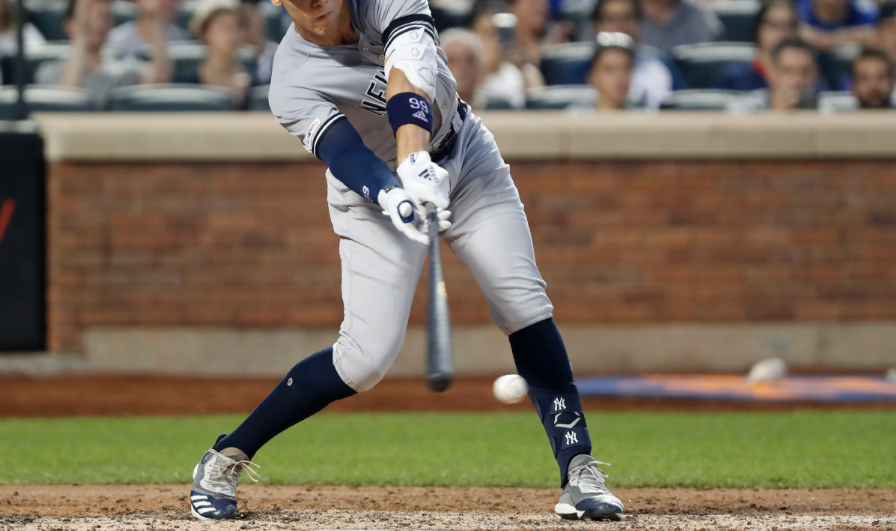
A pitcher fires a fastball past the hitter, the catcher secures it, and the umpire signals strike three. The batter is out. That’s a strikeout, one of baseball’s most recognizable plays and a crucial part of the battle between pitcher and hitter.
Not every strikeout looks that dramatic. Some hitters chase breaking balls that dive into the dirt. Others watch a pitch catch the corner of the strike zone without swinging. Either way, the batter has accumulated three strikes during the plate appearance.
The rules have a few wrinkles. A third strike doesn’t always result in an out, and a batter can sometimes reach first base despite striking out. Understanding these situations helps explain how strikeouts influence game strategy and appear in baseball statistics.
What Is a Strikeout in Baseball?
A strikeout is recorded when a batter accumulates three strikes during a plate appearance. Usually, the third strike retires the hitter without the defense having to field a batted ball.
A strike occurs when a batter swings and misses, takes a pitch through the strike zone, or hits certain foul balls. The strike zone extends over home plate from the midpoint between the batter’s shoulders and the top of their pants to the hollow beneath the kneecap. Its boundaries depend on the batter’s stance as they prepare to swing.
The strikeout meaning is straightforward: the batter has received a third strike before completing the plate appearance through another outcome. Unlike most groundouts and flyouts, a conventional strikeout doesn’t require a defender to field a ball put into play.
Pitchers who consistently strike out opponents often combine velocity, movement, location, and effective pitch sequencing. For hitters, avoiding strikeouts usually means making more contact, although power hitters may accept higher strikeout totals in exchange for home runs and extra-base hits.
How Does a Strikeout Happen?
Each plate appearance starts with a 0-0 count. The pitcher tries to retire the hitter, while the batter attempts to reach base or put the ball into play.
A pitch that crosses the strike zone without a swing is a called strike. A swing and miss also counts as a strike, even if the pitch is outside the zone.
Foul balls generally add a strike until the count reaches two strikes. Most subsequent foul balls leave the count unchanged, allowing the hitter to continue the at-bat.
Consider a typical sequence:
- The first pitch crosses the strike zone without a swing. The count becomes 0-1.
- The batter swings through a slider outside the zone, moving the count to 0-2.
- A fastball misses above the strike zone. The batter takes it, bringing the count to 1-2.
- The next pitch breaks sharply downward. The hitter swings and misses for strike three.
The hitter strikes out on four pitches. A strikeout can occur on as few as three pitches, but an at-bat can last much longer if the batter repeatedly fouls off pitches with two strikes.
Pitchers must also avoid issuing four balls, which generally results in a walk. That creates a tactical balance between throwing strikes and tempting hitters to chase pitches outside the zone.
Pitch selection plays an important role. Fastballs can help pitchers get ahead in the count or overpower hitters, while sliders, curveballs, and changeups exploit differences in movement and speed. Mixing these pitches makes it harder for batters to anticipate what’s coming.
Different Types of Strikeouts
Baseball recognizes two main types of strikeouts: swinging and called. Both count equally in official statistics, but they occur in different ways.
Swinging Strikeout
A swinging strikeout happens when the batter swings and misses at the third strike.
Pitchers create these opportunities by disrupting a hitter’s timing or disguising a pitch’s movement. A high fastball can beat the bat with velocity, while a slider may appear to be heading toward the strike zone before breaking away.
For example, a right-handed pitcher facing a right-handed hitter might throw a slider that starts near the outside corner before moving farther off the plate. If the hitter swings and misses, strike three is recorded regardless of whether the pitch crossed the strike zone.
Analysts use swinging-strike rate (SwStr%) to measure how frequently a pitcher generates swings and misses as a percentage of all pitches thrown. This differs from whiff rate, which measures misses relative to swings, and strikeout rate, which tracks completed strikeouts.
A foul tip can also produce strike three. It occurs when the ball travels sharply and directly from the bat to the catcher’s hand or mitt and is legally caught. Unlike an ordinary foul ball, a caught foul tip remains a live ball and counts as a strike, even with two strikes already in the count.
Called Strikeout
A called strikeout occurs when the batter doesn’t swing at the third strike and the umpire rules the pitch a strike. Baseball commentators commonly call this striking out looking.
These strikeouts often result from accurate pitch placement or a hitter misreading the pitch. A batter expecting a breaking ball might hesitate when a fastball catches the inside corner.
The home plate umpire traditionally determines whether a taken pitch passes through the strike zone. Although the zone is defined in the rulebook, judging its boundaries has long been an important part of officiating.
For pitchers, called strikeouts reward precise location and effective sequencing. For hitters, they can be particularly frustrating because they never take a swing.
What Happens After a Strikeout?
A strikeout ordinarily produces one out against the batting team. The retired batter leaves the field, and the next hitter steps to the plate.
Each half-inning ends after three outs. If a strikeout records the third out, the teams switch offensive and defensive roles.
With fewer than three outs, play continues. Existing baserunners generally remain where they are unless they attempt to advance or another play changes their positions.
Strikeouts are especially valuable with a runner on third and fewer than two outs. A fly ball caught deep in the outfield might allow that runner to score after tagging up, while some groundouts can also bring a run home. A strikeout usually prevents either outcome.
However, a strikeout doesn’t automatically make the ball dead. Runners can steal bases during the pitch, and a wild pitch or passed ball may allow them to advance. A caught foul tip also leaves the ball live.
Strikeout Rules and Special Situations
Several baseball strikeout rules produce outcomes that can surprise viewers, particularly when the catcher fails to secure the third strike or the batter commits a violation.
Uncaught Third Strike
If the catcher doesn’t legally catch the third strike, the batter may attempt to reach first base when first base was unoccupied at the time of the pitch or when there were already two outs.
The catcher can retire the batter by tagging them or making a throw to first base before the runner arrives. If the batter reaches safely, the pitcher still receives credit for a strikeout, even though no out was recorded on the play.
For example, with two outs and a runner on first, a hitter swings through a pitch that bounces past the catcher. Because there are already two outs, the batter can attempt to reach first despite the base being occupied.
This rule makes four strikeouts in one inning possible. If a batter reaches safely after an uncaught third strike, another hitter can come to the plate before the defense records its third out.
Foul Balls With Two Strikes
An ordinary foul ball cannot produce strike three when the batter already has two strikes. The count stays the same, allowing the plate appearance to continue.
A bunt that goes foul with two strikes results in a strikeout unless a fielder catches the ball before it touches the ground, in which case the batter is out on the catch. A legally caught foul tip can also count as strike three.
These distinctions matter because making contact with a pitch that goes foul can produce different results depending on how the ball is hit and whether it is caught.
Batter Violations and Automatic Strikes
Not every strikeout requires a conventional pitch. Under MLB’s pitch-timer rules, a batter must be in the box and alert to the pitcher with at least eight seconds remaining on the pitch clock. Failing to meet that requirement results in an automatic strike.
If the batter already has two strikes, the violation produces strike three and a strikeout without another pitch being delivered.
Other batter violations may carry different penalties. An automatic strike under the pitch-timer rules should not be confused with situations in which a batter is declared out for a separate rules violation.
How Strikeouts Are Recorded in Baseball Statistics
Strikeouts appear in both pitching and hitting statistics. For pitchers, they measure how often opposing batters receive a third strike. For hitters, they show how frequently their plate appearances end in strikeouts, including cases where they reach base on an uncaught third strike.
The official statistical abbreviation is SO, while scorebooks, broadcasts, and baseball discussions widely use K.
In traditional scorekeeping, a regular K commonly indicates a swinging strikeout, while a backward K (ꓘ) represents a called third strike. Both count equally toward official strikeout totals.
Several statistics provide additional context:
| Statistic | Meaning |
| SO or K | Total strikeouts |
| K/9 | Strikeouts per nine innings pitched |
| K% | Percentage of batters faced who strike out |
| K/BB | Ratio of strikeouts to walks |
| Swinging-strike rate | Percentage of pitches that produce a swing and miss |
K/9 helps compare pitchers with different workloads. A pitcher with 180 strikeouts over 180 innings has a K/9 of 9.0. Another with 120 strikeouts in 100 innings has a higher K/9 of 10.8.
Strikeout percentage measures performance differently because it uses batters faced rather than innings pitched. A pitcher who strikes out 30 of 100 batters faced has a strikeout rate of 30%.
K/BB compares strikeouts with walks, offering a basic measure of how well a pitcher combines the ability to miss bats with limiting free passes.
No single strikeout statistic tells the whole story. A pitcher might strike out plenty of hitters but still surrender home runs, hard contact, or too many walks. ERA, WHIP, walk rate, and other measures help evaluate overall effectiveness.
For hitters, a high strikeout rate may indicate contact problems, but it doesn’t automatically mean poor offensive production. Some successful power hitters strike out frequently while contributing home runs, walks, and extra-base hits.
Famous Strikeout Records in MLB History
MLB strikeout records reveal how pitching workloads and offensive approaches have changed over time. Earlier generations of pitchers often worked far more innings than modern starters, making comparisons across eras difficult.
Nolan Ryan holds the MLB career record with 5,714 strikeouts. His exceptional fastball, durability, and 27-season career helped him establish a mark no other pitcher has matched. He also led his league in strikeouts 11 times.
Other notable career leaders include:
| Pitcher | Career strikeouts |
| Nolan Ryan | 5,714 |
| Randy Johnson | 4,875 |
| Roger Clemens | 4,672 |
| Steve Carlton | 4,136 |
| Bert Blyleven | 3,701 |
Randy Johnson was particularly dominant during the late 1990s and early 2000s. His powerful fastball and sharp slider made him difficult to hit, especially for left-handed batters. He recorded six seasons with at least 300 strikeouts.
The recognized major league single-season record belongs to Matt Kilroy, who struck out 513 batters in 1886. Pitchers during that period regularly threw far more innings than their modern counterparts.
For MLB’s modern era, generally defined as beginning in 1901, Nolan Ryan holds the single-season record with 383 strikeouts in 1973. Sandy Koufax recorded 382 in 1965, and Randy Johnson reached 372 in 2001.
Individual game records are equally impressive. Roger Clemens struck out 20 batters in a nine-inning game against the Seattle Mariners in 1986 and repeated the achievement against the Detroit Tigers in 1996. Kerry Wood matched the mark in 1998, followed by Max Scherzer in 2016.
These performances share the recognized MLB record for strikeouts by a pitcher in a nine-inning game. Longer games can produce different totals, so the nine-inning qualification matters when comparing single-game achievements.
Recording 20 strikeouts in nine innings requires sustained dominance. Pitchers must repeatedly retire hitters who have already seen their repertoire while managing fatigue and pitch selection.
Strikeouts have become increasingly prominent in modern baseball. Many hitters prioritize power and hard contact, accepting more swings and misses. Meanwhile, pitchers use higher velocity, sharper breaking pitches, and detailed scouting to exploit weaknesses.
Still, pitchers can succeed without elite strikeout totals. Limiting walks, inducing weak contact, and preventing runs remain essential parts of effective pitching.
FAQ
Does a Strikeout Always Count as an Out?
No. If the catcher fails to legally catch the third strike, the batter may attempt to reach first base when the base was unoccupied at the time of the pitch or there were already two outs. The strikeout still counts even if the batter reaches safely.
Can a Batter Strike Out on a Foul Ball?
Yes, in specific situations. A foul bunt with two strikes results in a strikeout unless the ball is caught for an out. A legally caught foul tip can also serve as strike three, unlike an ordinary foul ball with two strikes.
Why Is a Strikeout Represented by the Letter K?
The letter K comes from early baseball scoring conventions. Henry Chadwick, a 19th-century baseball writer and statistician, used K as shorthand for struck out. The notation became a standard part of baseball scorekeeping.
What Is the Difference Between a Swinging Strikeout and a Called Strikeout?
A swinging strikeout happens when the batter swings and misses on strike three. A called strikeout occurs when the hitter takes a pitch ruled a strike by the umpire. Both count equally in official statistics.
Can a Pitcher Record More Than Three Strikeouts in One Inning?
Yes. An uncaught third strike can allow a batter to reach first without an out being recorded. The pitcher still receives credit for the strikeout, making four or more strikeouts in one inning possible.